
Defend, Educate, Inform
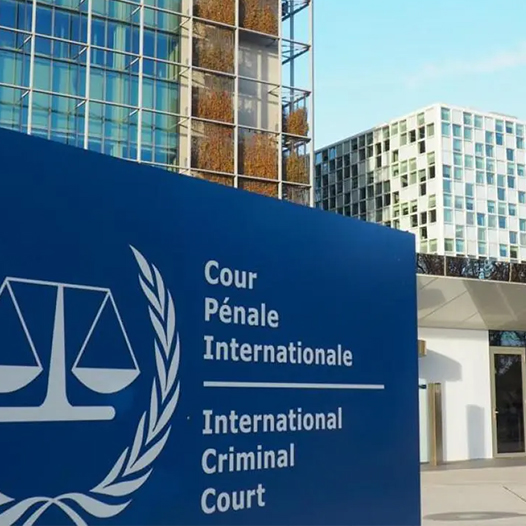
For long, there has been a lingering sentiment that Africa’s relationship with the International Criminal Court (ICC) is relentlessly negative and antagonistic. This is a myth.
At this point, this discussion seems out of place – failing to read the room. Or someone might even call it naive under the extant systemic disregard and devaluation of a global rules-based co-existence with supervisory, regulatory and adjudicatory institutions. Fair point. Yet, in whatever new mode of co-existence we craft out of the present state of flux, there must still be a place for some kind of rules and some manner of supranational institutions to make it all work.
Lest Africans continue to be misrepresented, let’s break down the ICC myth, if only for the record.
Africa has the most representation on the ICC
125 countries are States Parties to the Rome Statute establishing the ICC. Of them,
Africa remains the region with the most representation on the ICC.
The mass withdrawal attempt
There has been a past attempt to rally a mass withdrawal of African states from the Rome Statute. The African Union (AU) in January 2017 passed a non-binding resolution to collectively support a strategy to withdraw from the ICC, citing sovereignty concerns. The resolution was premised on an argument previously fronted by some AU states, that the ICC is biased and has unevenly focused on Africa and its leaders, while ignoring abuses by Westerners. This mass withdrawal attempt failed. Only Burundi has withdrawn since that January 2017. In October 2016 South Africa initiated an attempt to withdraw from the ICC following disputes over an arrest warrant for former Sudanese President Omar al-Bashir who visited in 2015, to the point of submitting a formal notice of withdrawal to the UN Secretary-General. This notice was revoked a few months later in 2017 after a local opposition party took to the domestic courts. The Gambia also issued a notice of withdrawal in November 2016 under the hand of then President Yahya Jammeh, accusing the ICC of being an “International Caucasian Court” biased against Africa. Again, this was immediately withdrawn in January 2017 when a new government took power. Interestingly, Gambia’s Fatou Bensouda was at the time the ICC’s chief prosecutor.
Most recently in September 2025, the Sahel Alliance of Burkina Faso, Mali, and Niger announced its joint intention to withdraw, citing the ICC as an “instrument of neo-colonialism”. The withdrawals are yet to take effect.
Elsewhere, we have also seen withdrawals from Europe and the Asia Pacific; Hungarian MPs passed a withdrawal Bill in May 2025, and the country will cease to be a member on 2 June 2026, and the Philippines had earlier withdrawn in 2019.
In truth, most withdrawals or attempted withdrawals look more like machinations of those who have instrumentalized an argument against the ICC to protect themselves from the long arm of justice.
It is countries like Kenya whose leaders were being investigated that were pushing the African withdrawal agenda, and Rwanda whose leader seems to sense the potential danger of being indicted himself.
The role of Africans and African governments in setting up the ICC
African governments and African civil society played a leading role in championing the ICC from the outset in the mid 1990s. History records that African states were among the most enthusiastic early supporters of a permanent international court to combat impunity. As a matter of fact, the first ratification of the Rome Statute was by Senegal on 2 February 1999. The first cases brought before the ICC were referred voluntarily by African nations, including the Democratic Republic of Congo, Uganda, and the Central African Republic. The first Review Conference of the Rome Statute in 2010 was hosted by Uganda.
It is simply inaccurate to believe that the sentiments of a few African leaders who have vociferously spoken against the ICC represent the mainstream African sentiment. Those leaders, one will find, have of course not ratified or even signed the Protocol on Amendments to the Protocol of the African Court of Justice and Human and Peoples’ Rights (Malabo Protocol) which is seeking to establish an African continental court with criminal jurisdiction. It apparently reads like a search for impunity masked as Pan-Africanism.
Sovereignty and double standards
Sentiments of national sovereignty are strong in Africa, and for good reason. This is the same everywhere else and in fact is increasing. So, this is not an African thing. Indeed, the US – until recently a self-appointed democracy prefect of the world – has never been part of the ICC squarely for sovereignty reasons. But sovereignty is hardly a justification for impunity and can never be. So, let’s move on.
There are also imperialist perceptions, given the physical location, funding and modus operandi of the ICC. In perception, the ICC is indeed seen as a Western organization in some ways. And that is a problem given the world’s history of colonialism and neo-colonialism. And true, one cannot rule out condescending approaches by the Global North towards Africa and the Global South and the temptation to instrumentalise the court, and corresponding negative reactions from Africans and the people of the Global South.
It is correct that most of those prosecuted or investigated have been Africans; there are indeed many African situations investigated or prosecuted in Kenya, Libya, Sudan, Cote D’Ivoire, Democratic Republic of Congo, Uganda, Central African Republic, Mali, and Burundi. But this reality is not without basis. As already seen, Africa is heavily represented in the membership of the ICC, more than any other region. Then a few investigated situations are voluntary referrals, where African countries themselves have asked the ICC to intervene, such as the situation in the DRC, Uganda, CAR, and Côte d’Ivoire, though others were referred by the UN Security Council. But the ICC has since moved to open numerous other investigations elsewhere, including Venezuela, Georgia, Ukraine (Russian violations), Myanmar, Palestine, Ukraine, and Afghanistan. But in the end, the point is not to say, “don’t touch our criminals”, but that all criminals must find no refuge anywhere, and to reform the ICC to better respond to the demands of equitable justice.
So, rightly so, Africa wants reforms. The Withdrawal Strategy that was adopted in the January 2017 Resolution by the AU in fact captures the proposals for reform through amendments to the Rome Statute. Mischaracterising Africa’s relationship with the ICC only works to weaken the ICC, already under strain at the weight of reigning impunity in the international law order.
In the end, it is not factually correct that Africa has a negative sentiment towards the ICC. What is true is that Africans do not want double standards. There are so many leaders in the Western world who have committed crimes against humanity in different countries – and continue to commit to this day right before our eyes, with visuals livestreamed into our homes daily. The world expects that these are also prosecuted, otherwise notions of bias get oxygen.
A quest for international justice
At home, Africans have negotiated a first-of-its-kind court: an African Court of Justice and Human and Peoples’ Rights that will have criminal jurisdiction, through the Protocol on Amendments to the Protocol of the African Court of Justice and Human and Peoples’ Rights (Malabo Protocol) adopted in June 2014. Twelve years later, only Angola has formally ratified the Malabo Protocol out of the 15 ratifications required for it to enter into force. There is no Pan-Africanism or sovereignty to be served by impunity. One would hope and expect the leading ICC withdrawal voices to have by now subscribed to Africa’s homegrown regional criminal court. Alas. Yet still, this does not exonerate the undue, negative, hostile and patently false narrative painted of Africa’s relationship with the ICC. The realities of international criminal justice are that it remains a struggle at home and away to achieve international law’s full utility and potential efficacy. Our energies are better spent in that endeavour.

Institute for Human Rights and Development in Africa (IHRDA)
949 Brusubi Layout, AU Summit Highway,
P.O. Box 1896 Banjul, The Gambia.
Tel: +220 44 10 413/4
Cell: +220 77 51 200
Email: ihrda@ihrda.org