
دافع، ثقّف، عرّف
مقدمة من المدير التنفيذي
في عام 1998، آمن مؤسسونا بأن آليات حقوق الإنسان الإقليمية الأفريقية يمكن أن تصبح أدوات فعّالة لتحقيق العدالة، شريطة استخدامها بشكل استراتيجي ومستمر وبالشراكة مع الفئات الأكثر تضرراً من الظلم. وبعد مرور ما يقرب من ثلاثة عقود، لا يزال هذا الاعتقاد يوجه عملنا.
اتسم عام 2025 بالإلحاح والعزيمة. ففي مختلف أنحاء القارة، تقلص الحيز المدني في بعض السياقات، وتفاقم الضرر البيئي، واستمرت الممارسات الضارة، واختبر القمع السياسي المؤسسات الديمقراطية، لا سيما في البلدان التي أجرت انتخابات. ومع ذلك، واصلت هيئات حقوق الإنسان الإقليمية، رغم الصعوبات، إثبات قدرتها على صياغة الفقه القانوني، ووضع المعايير، والمطالبة بالمساءلة.
في هذا السياق، ظل معهد حقوق الإنسان والتنمية في أفريقيا ثابتاً في مهمته: ضمان وصول الضحايا والمجتمعات إلى آليات العدالة الإقليمية، وأن قرارات آليات حقوق الإنسان لا تبقى مجرد انتصارات رمزية بل تترجم إلى تغيير حقيقي.
في عام ٢٠٢٥، صدرت ثمانية قرارات في قضايا قادتها أو دعمتها المنظمة الدولية لحقوق الإنسان والتنمية أمام هيئات حقوق الإنسان الإقليمية. وقد عززت هذه القرارات الفقه القانوني المتعلق بالعنف الجنسي والعنف القائم على النوع الاجتماعي، والممارسات الضارة بما في ذلك ختان الإناث، وحماية الأشخاص المصابين بالمهق، والجنسية وانعدام الجنسية، والوصول إلى العدالة، والحريات المدنية. ولا يمثل كل حكم من هذه الأحكام تقدماً قانونياً فحسب، بل يمثل أيضاً اعترافاً بالضحايا الذين ظلت معاناتهم دون معالجة لفترة طويلة.
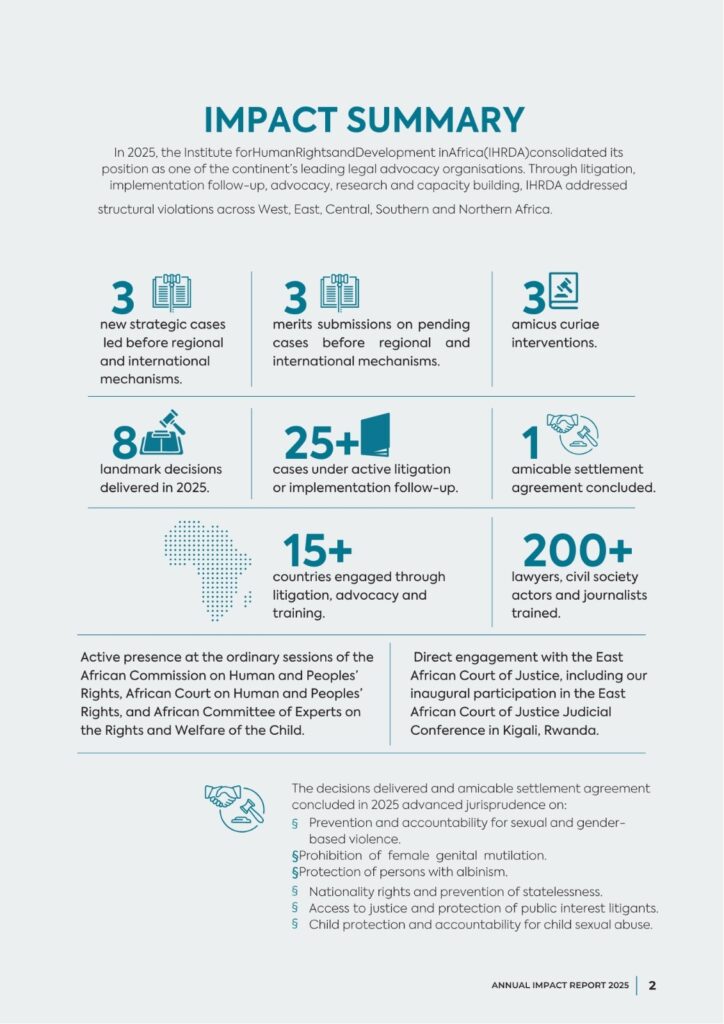
في الوقت نفسه، قدمنا مذكرات جديدة و/أو متقدمة بشأن قضايا معلقة تتعلق بزواج الأطفال في سيراليون، وحماية العمالة المنزلية، وأوامر التكاليف الباهظة الصادرة ضد المتقاضين في قضايا المصلحة العامة في ملاوي، والإخفاقات في حماية الطفل في بوتسوانا، والاعتقال التعسفي للفاعلين السياسيين والعدالة الانتخابية في تنزانيا، وتقييد الحريات المدنية واحتجاز الفاعلين السياسيين في توغو، وحرمان الأشخاص ذوي النفوذ السياسي من وثائق السفر ومصادرة ممتلكاتهم في رواندا، وختان الإناث في غامبيا. تعكس هذه القضايا استراتيجيتنا المدروسة لمعالجة الانتهاكات الهيكلية والتحديات الناشئة في مجال حقوق الإنسان في مناطق متعددة.
مع ذلك، لا ينتهي عملنا بإصدار الأحكام أو التوصيات، إذ يبقى التنفيذ الحلقة الأضعف في سلسلة العدالة. في عام ٢٠٢٥، عززنا تعاوننا مع الحكومات والمؤسسات الوطنية وآليات حقوق الإنسان الإقليمية والضحايا لضمان أن تُفضي قرارات المحاكم وغيرها من آليات حقوق الإنسان إلى التعويض والعلاج الطبي والتعليم والسكن وتخصيص الأراضي والإصلاح القانوني. كان التقدم متفاوتاً، ولكنه ملموس.
وبصفتها جهة رائدة في مجال الفكر، واصلت منظمة IHRDA إنتاج أبحاث متطورة، مع نشر دراسة شاملة حول الأعمال التجارية وحقوق الإنسان في أفريقيا.
وراء هذا العمل يقف فريق متنامٍ ومتفانٍ، ومنظمة دولية متطورة لحقوق الإنسان والتنمية، وشراكات معززة مع المجتمع المدني في جميع أنحاء أفريقيا، وشجاعة الضحايا الذين يواصلون وضع ثقتهم في العدالة الإقليمية.
ونحن نتطلع إلى المستقبل، ما زلنا على قناعة بأن مؤسسات حقوق الإنسان الأفريقية لا غنى عنها لمستقبل القارة. فبالمثابرة والتعاون والمشاركة الاستراتيجية، يمكن للحقوق المكتوبة أن تتحول إلى حقوق واقعية.
الدكتور موسى كيكا المدير التنفيذي
حمّل التقرير الكامل هنا

معهد حقوق الإنسان والتنمية في أفريقيا (IHRDA)
949 بروسوبي لاي أوت، طريق أو إيه ساميت السريع،
صندوق بريد 1896 بانجول، غامبيا.
الهاتف: +220 44 10 413/4
الهاتف المحمول: +220 77 51 200
البريد الإلكتروني: ihrda@ihrda.org